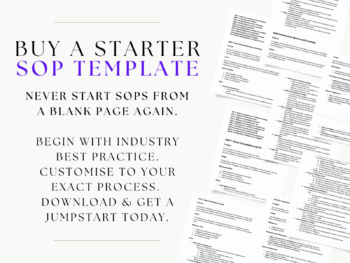
Do you need to create Conservation Department SOPs but don’t know where to start? Buy an expertly crafted set of 10 essential SOPs (5,000 words of best-practice procedures) and save yourself over 10 hours of research, writing, and formatting. Trusted by some of the world’s leading companies, these Word/Google Docs format SOPs will help you jumpstart your SOP creation process as a Conservation Department.


Example SOPs: Conservation Department
$19
Conservation Department SOPs
Creating Standard Operating Procedures for your Conservation Department can be difficult and take time. That’s why we’ve created these example Conservation Department SOPs so you can jumpstart your SOP creation process. We want to help you set up your environment systems and processes by taking these sample SOPs and using them to build your Conservation Department operations manual. By having all your environment procedures in one place, your team will have their Conservation Department company handbook available when needed. Let’s look at some Conservation Department SOP examples.
Conservation Department SOP Examples
In the Conservation Department, the first most common SOP is the “Habitat Restoration Procedure,” which outlines the steps for restoring and maintaining natural habitats to support biodiversity. The second SOP is the “Wildlife Monitoring Protocol,” detailing methods for tracking and recording wildlife populations to assess ecosystem health. The third SOP is the “Environmental Impact Assessment Process,” which provides guidelines for evaluating the potential effects of proposed projects on the environment. The fourth SOP is the “Sustainable Resource Management Plan,” focusing on strategies for the responsible use and conservation of natural resources. Lastly, the fifth SOP is the “Community Engagement Framework,” which describes approaches for involving local communities in conservation efforts to ensure sustainable outcomes

Habitat Restoration SOP
The “Habitat Restoration Procedure” is the first and most common SOP in the Conservation Department. It provides a detailed framework for restoring and maintaining natural habitats to support biodiversity. The purpose of this SOP is to ensure that ecosystems are rehabilitated effectively to promote ecological balance and species diversity. Its scope includes various habitat types, such as wetlands, forests, and grasslands, and it is referenced by other SOPs like the “Wildlife Monitoring Protocol” and the “Sustainable Resource Management Plan.” Key steps involve assessing the current state of the habitat, planning restoration activities, implementing restoration techniques, and monitoring progress. This SOP is crucial for guiding conservation efforts and ensuring that restoration projects are conducted systematically and sustainably
Wildlife Monitoring Protocol SOP
The “Wildlife Monitoring Protocol” is the second SOP in the Conservation Department, designed to track and record wildlife populations to assess ecosystem health. Its purpose is to provide a systematic approach to gathering data on wildlife, which is crucial for understanding biodiversity trends and making informed conservation decisions. The scope of this SOP includes all wildlife monitoring activities within the department’s jurisdiction. It references the “Habitat Restoration Procedure” to ensure that monitoring aligns with habitat restoration efforts. Key steps involve selecting monitoring sites, using standardized methods for data collection, and analyzing the data to identify changes in wildlife populations. This protocol is essential for maintaining ecological balance and supporting the department’s broader conservation goals
Community Engagement Framework SOP
The “Environmental Impact Assessment Process” SOP in the Conservation Department outlines the guidelines for evaluating the potential effects of proposed projects on the environment. Its purpose is to ensure that any development or project considers environmental sustainability and minimizes negative impacts on ecosystems. The scope of this SOP includes all proposed projects within the department’s jurisdiction, requiring thorough assessments before approval. It references the “Habitat Restoration Procedure” and “Wildlife Monitoring Protocol” SOPs to ensure comprehensive evaluations. The process involves initial screening, scoping to identify key environmental issues, impact analysis, mitigation planning, and reporting. This SOP is crucial for maintaining ecological balance while allowing for responsible development
Sustainable Resource Management Plan SOP
The “Sustainable Resource Management Plan” SOP in the Conservation Department outlines strategies for the responsible use and conservation of natural resources. Its purpose is to ensure that resource utilization aligns with ecological sustainability, supporting long-term environmental health. The scope of this SOP includes all activities related to resource extraction, usage, and replenishment within the department’s projects. It references the “Habitat Restoration Procedure” and “Environmental Impact Assessment Process” SOPs to ensure integrated conservation efforts. Key steps involve assessing resource availability, implementing sustainable extraction methods, and monitoring resource regeneration. This SOP is crucial for balancing human needs with ecological preservation, ensuring that natural resources are managed effectively and sustainably
Community Engagement Framework SOP
The “Community Engagement Framework” is the fifth SOP in the Conservation Department, designed to involve local communities in conservation efforts to achieve sustainable outcomes. Its purpose is to foster collaboration and ensure that conservation initiatives are aligned with community needs and values. The scope of this SOP includes strategies for effective communication, partnership building, and participatory decision-making processes. It references the “Habitat Restoration Procedure” and the “Sustainable Resource Management Plan” to integrate community input into these areas. Key steps involve identifying stakeholders, conducting community meetings, and developing joint action plans. This framework ensures that conservation efforts are inclusive and benefit both the environment and local populations
Conservation Department SOP Templates
Looking for SOP templates for your Conservation Department company? We’ve got you covered. You can build out your company SOPs using the sample SOP information above (added to our template) or our team can build starter SOP templates to add to your Conservation Department staff handbook. Get in touch if you’ve got questions about the quickest way to build out your environment SOPs library.
Related products
Updating…